Key takeaways
- Kitec went into Ontario homes from 1995 to 2007, and most of the Bolton East streets were finished in the 1990s.
- Look for orange and blue lines and brass fittings marked Kitec or KTC, since the fittings are where the pipe fails.
- Replace it in stages, starting with the exposed basement runs, and let the renovations do the bathrooms and kitchen.
The years Kitec went into Ontario houses
Kitec is a plastic pipe with a thin aluminum layer inside, joined with brass fittings. Ontario builders and renovators used it from 1995 to 2007, after which it left the market. The pipe is orange for hot and blue for cold, and each brass fitting is stamped Kitec or KTC.
Any house built or replumbed in that window can have it, and an older house can have it in a room renovated during those years.
Bolton East, built in the middle of the window
The census figures for Bolton East put 58 per cent of its homes between 1991 and 2000, with another 10 per cent from 2001 to 2005. The subdivisions around Queensgate Boulevard, east of the river, went up in that stretch. Anything finished from 1995 on falls inside the Kitec years.
Bolton West has its own share, with 29 per cent of homes dating from 2001 to 2005, and North Hill adds the 19 per cent of its stock built in the same five years.
How to recognise it in your basement
Start at the water heater, where the hot and cold lines are easiest to see. Orange and blue pipe on brass fittings is the signature, and many of these houses have a manifold near the heater with a row of coloured lines leaving it, one per fixture.
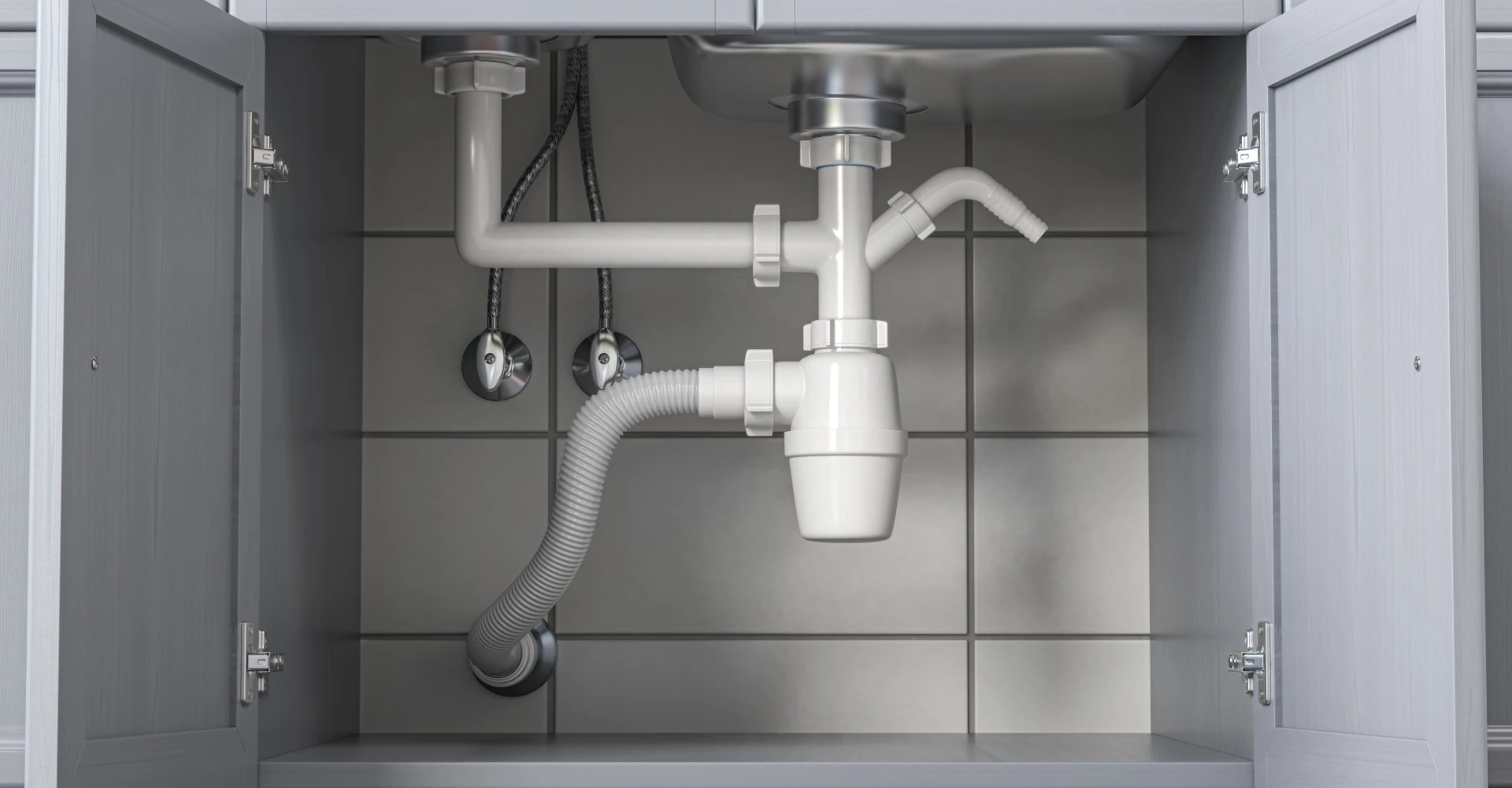
Under the kitchen and bathroom sinks the pipe shows again at the stops. Read the stamp on the brass with a flashlight, and look for the name printed along the pipe.
What a failure looks like
Kitec rarely leaks along the pipe. It fails at the fittings, where the brass corrodes from the inside and the joint loosens, and on hot water runs where the pipe swells. The first visible sign is often a white or green crust around a fitting, or weaker hot water flow at one fixture.
The leak that follows can be a drip or a burst, and in a house with a finished basement the ceiling below the bathroom is where it shows.
Replacing it in stages
Few owners replace every pipe at once, and they do not have to. The first stage is the exposed basement runs and the manifold, where nothing has to be opened. The second is each bathroom and the kitchen as they are renovated, while the walls are open.
The hidden runs in ceilings and chases come last. Plumbing Bolton maps every run on the first visit, counts the fittings and sets the order, so each stage leaves the house tested and whole.
Related services
Kitec Plumbing Replacement
Need Kitec Plumbing Replacement in Bolton? Plumbing Bolton replaces Kitec lines and verifies tight, reliable service. Request a quote.
Repiping
Need Repiping in Bolton? Plumbing Bolton upgrades old piping and confirms everything holds under pressure. Schedule a quote.
Leak Detection
Need Leak Detection in Bolton? Plumbing Bolton locates leaks accurately and outlines repair choices. Book an assessment.
Plumbing Home Inspection
Need Plumbing Home Inspection in Bolton? Plumbing Bolton inspects plumbing and explains what needs attention. Book an inspection.
FAQ